Preamble: The Top Reasons Behind the Cancellation of Canada’s Carbon Fee and Dividend (CF&D) — the First Four Matter Most 1. Disinformation Campaigns 2. Relentless Political Opposition 3. Oil Speculators Deliberately Causing Inflation 4. Liberal Government’s Communication Failures The Liberal Party’s approach to promoting the CF&D was ineffective. Initially, the rebates were buried in annual income tax forms (2019–2021), leaving many Canadians unaware of their existence. Citizens’ Climate Lobby (CCL) Canada’s ongoing advocacy efforts eventually led to quarterly rebates via direct deposit or cheque, but these payments were not clearly labelled. The rebate’s name was changed from “Climate Action Incentive” to “Canadian Carbon Rebate” in 2022 in bank statements, but confusion persisted. (CCL Canada also advocated for those changes.) Regional carve-outs, such as exemptions for home heating oil, further complicated public perception. Ultimately, the government failed to counter opposition narratives or effectively communicate the benefits of the policy. 5. Public Polarization and Distrust 6. Parliamentary Budget Office (PBO) Reports 7. Lack of Provincial Leadership 8. The Climate Movement At the same time, CCL’s focus was divided among multiple critical climate priorities—such as emissions caps, methane regulations, and clean electricity standards. In hindsight, it’s possible that the broader climate movement may not have fully recognized the unique strength and impact of this policy, despite years of advocacy and public education. Moving forward, this experience underscores the importance of unity and defending key climate policies long after they have been enacted. PS Although we are not lobbying for CF&D currently, we have been told by politicians that this was an excellent policy and it could come back again. This story is not over by a longshot.
In February, Dr. James Hansen reached out to me for my perspective on a pressing question: Why was Canada’s Carbon Fee and Dividend (CF&D) program cancelled? This policy is formally known under the Greenhouse Gas Pollution Pricing Act of 2018 as the Fuel Price and, in the media, as the Consumer Carbon Price—but neither term fully captures its essence. Both labels overlook a critical feature: the dividend, eventually known as the Canadian Carbon Rebate. For clarity and accuracy, I’ll refer to the policy as CF&D throughout this discussion.
Fossil fuel companies and their political allies spent over $1 million on Meta platforms, falsely blaming CF&D for inflation in 2024. This disinformation campaign significantly undermined public support for the policy,
CBC: Fossil fuel companies spent over $1M on Meta ads falsely blaming carbon tax for inflation
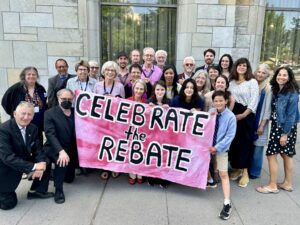
The Conservative Party of Canada’s “Axe the Tax” campaign, including rallies and Ontario provincial government gas pump stickers, highlighted the cost of the tax while ignoring the dividend/rebate. This opposition was highly visible and effective, even in communities that traditionally supported climate action. Here is how I countered one of the rallies in my community:
CBC: Conservative MP holds “Axe the Tax” rally in Sudbury
Without the disinformation and relentless opposition, the CF&D might have survived the affordability crisis. However, another critical factor was the role of financial speculation in global oil markets, which—not supply shortages or carbon pricing—was the primary driver of Canada’s inflation surge in 2022:
Centre for Future Work: Speculative oil markets drove inflation crisis
CBC: Many Canadians unaware they receive carbon tax rebates
The combination of the isolation and mental health impacts of COVID-19 plus social media polarization, and a weakened mainstream media landscape eroded public trust in science and governments. This growing distrust of science and government institutions made it easier for opponents to spread disinformation about the CF&D, further eroding public support. In my travels across Northern Ontario and other rural regions, I observed a growing distrust of vaccines, science, and government—even in areas that previously supported progressive climate policies and politicians. Symbols of this shift, I witnessed were people flying Trump 2024, Confederate and Gadsden flags on their lawns.
The PBO reports were easily spun to undermine public support for CF&D. While every report clearly indicated that, when considering only the direct costs of the consumer carbon price with rebate, households in the bottom four income quintiles came out ahead on average, the PBO also analyzed indirect costs. When these indirect costs were factored in, the PBO determined that only the bottom 40% of households received more in rebates than they paid. However, the inclusion of indirect costs, based on unrealistic assumptions, created confusion and weakened public confidence in the policy.
The PBO’s Latest Word on Carbon Pricing
Provincially, even progressive governments in Manitoba, British Columbia, New Brunswick, and Nova Scotia failed to support it, with Quebec being the sole exception due to its own policy.
While external factors played a role, it’s also important for us to reflect on our collective efforts as a movement as a whole. Canada’s CF&D policy that had endured through two elections, and its cancellation was unexpected. The rapid spread of disinformation caught many off guard, and by the time the scale of the challenge became clear, momentum had shifted.

Related Articles
-

From Rebate to Rate Cut: Low-Income Households Lose Out
-
MEDIA RELEASE: New GST Benefit Fails to Replace Carbon Pricing Payments for Low-Income Canadians
-
LASER TALK: Reflections on the Loss of the Canada Carbon Rebate
-
MEDIA RELEASE: How Citizens’ Climate Lobby Helped Shape Canada’s Carbon Rebate System