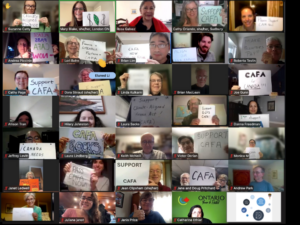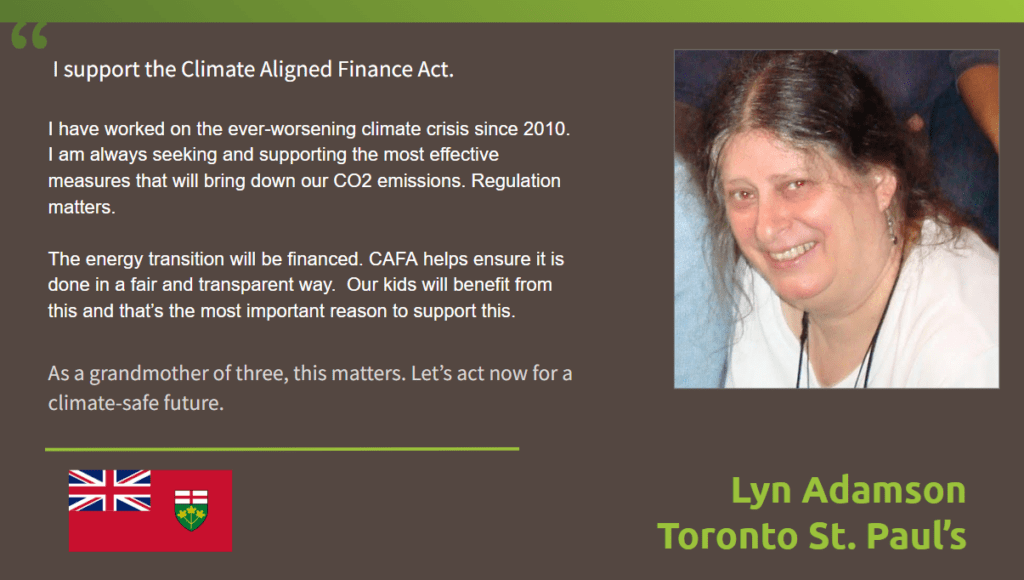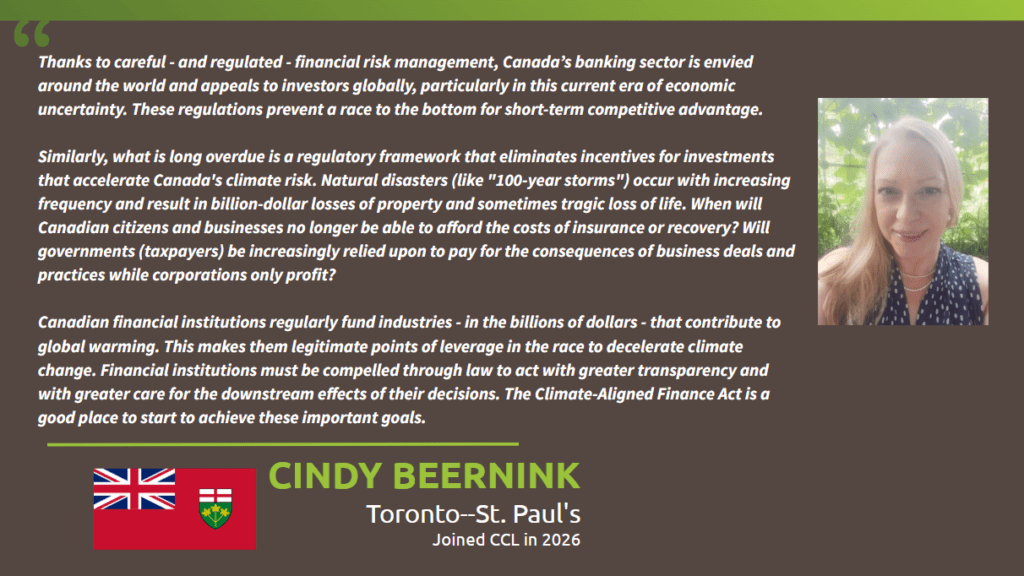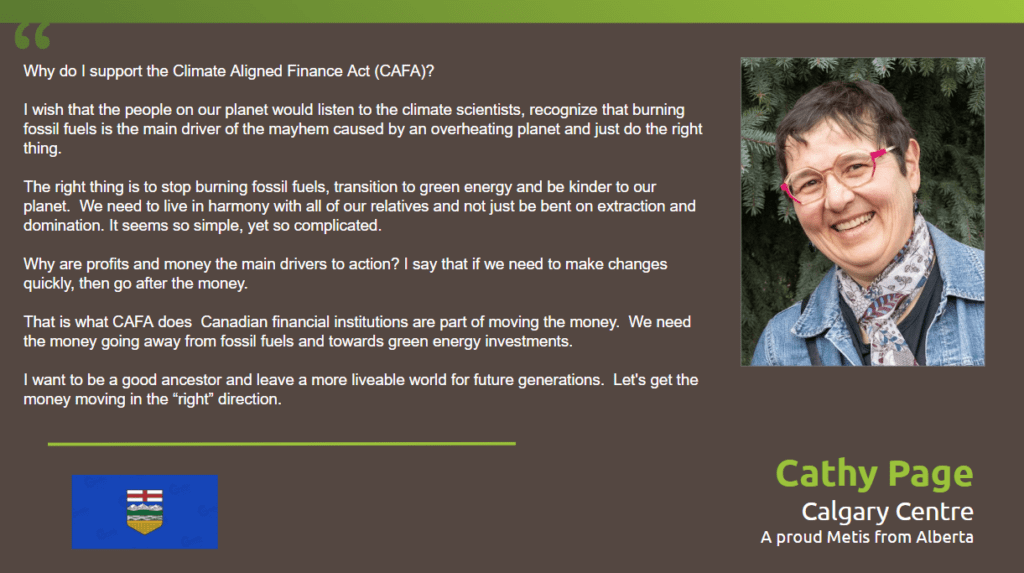
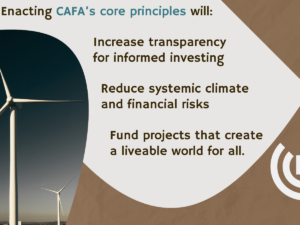
Since March 2022, Citizens’ Climate Lobby Canada has collaborated with Senator Rosa Galvez and over 120 civil society organizations to align Canada’s financial system with the urgent realities of the climate crisis. On December 10, 2025, Senator Galvez provided an update on the Climate-Aligned Finance Act (CAFA), reintroduced in October 2025 as Senate Bill S-238. This legislation is a critical step toward ensuring Canada’s financial flows support climate action and a just transition. To build political will for CAFA, we formed a national action team. Currently, over two dozen pods of members from Citizens’ Climate Lobby Canada and Grand(m)others Act to Save the Planet are actively securing appointments with key senators to advance this agenda. Together, we are clearing the path for climate-aligned finance regulations in Canada. This page serves as a resource hub for our members and allies, offering tools, updates, and ways to engage. Upcoming Advocacy: June 1-3 we will be in to Ottawa to lobby for CAFA. Stay tuned for opportunities to participate or support our efforts either in person or virtually. Note there is an entire Google Drive to this lobbying effort. You have to be on the team to access them. This paper petition if for the House of Commons Climate Aligned Finance Act Parliamentary Petition Government resources: For Further Information Instructions: Hand-deliver or send the original copy of the petition to: YOUR MP’S NAME No stamp is required for Parliament in Ottawa. If your MP does not want to read the petition, you can send it to other MPs who will. Follow up by asking when it will be read in Parliament, how it was received and a big thank you via snail mail, email, and social media. Please inform us in your monthly Citizens’ Climate Lobby Action Report if your petition has been read aloud in the House of Commons. It is considered to be outreach. By informing the national office we can thank them on Twitter and Facebook. Cabinet Ministers are not permitted to read petitions in the House of Commons as it would constitute a “conflict of interest”. Thus if your MP is a cabinet Minister you should inform him/her about the petition and ask if he or she could suggest another MP from your province who might read the petition instead. WE DID IT! PARLIAMENTARY E-PETITIONS These are the official e-petitions that are read in the House of Commons. Online parliamentary petitions and any online petition are a lot of work. Here are the steps to go through to get one considered by our network. For Valentines Day 2026 we created postcards to support the Climate Aligned Finance Act. We have changed the back of the card so that you can use them year round. Note the back of the cards do not reference Valentine’s Day. Printing instructions: Signing the postcards: Who to send the postcards to? And two of the three cards are for all Parliament, so feel free to include MPs in your region, the Prime Minister, the Finance Minister, and MPs on these committees: Coming soon,Lobbying Resources
Paper Petition
The Path of Paper Petition
Paper Petitions – Guide and Terms of Use
Clerk of Petitions
Room 314-C, West Block
House of Commons
Tel: 613-992-9511
Fax: 613-947-7626
Email PMB-AED@parl.gc.ca
House of Commons
Ottawa, Ontario
K1A 0A6
Please note this 2020 petition 2020 to the Government of Canada to Improve the Greenhouse Gas Pollution Pricing Act was implemented.
CCLC Petition September 2020 ENGLISH (PDF)
CCLC Petition Septembre 2020 FRANCAIS (PDF)
Postcard
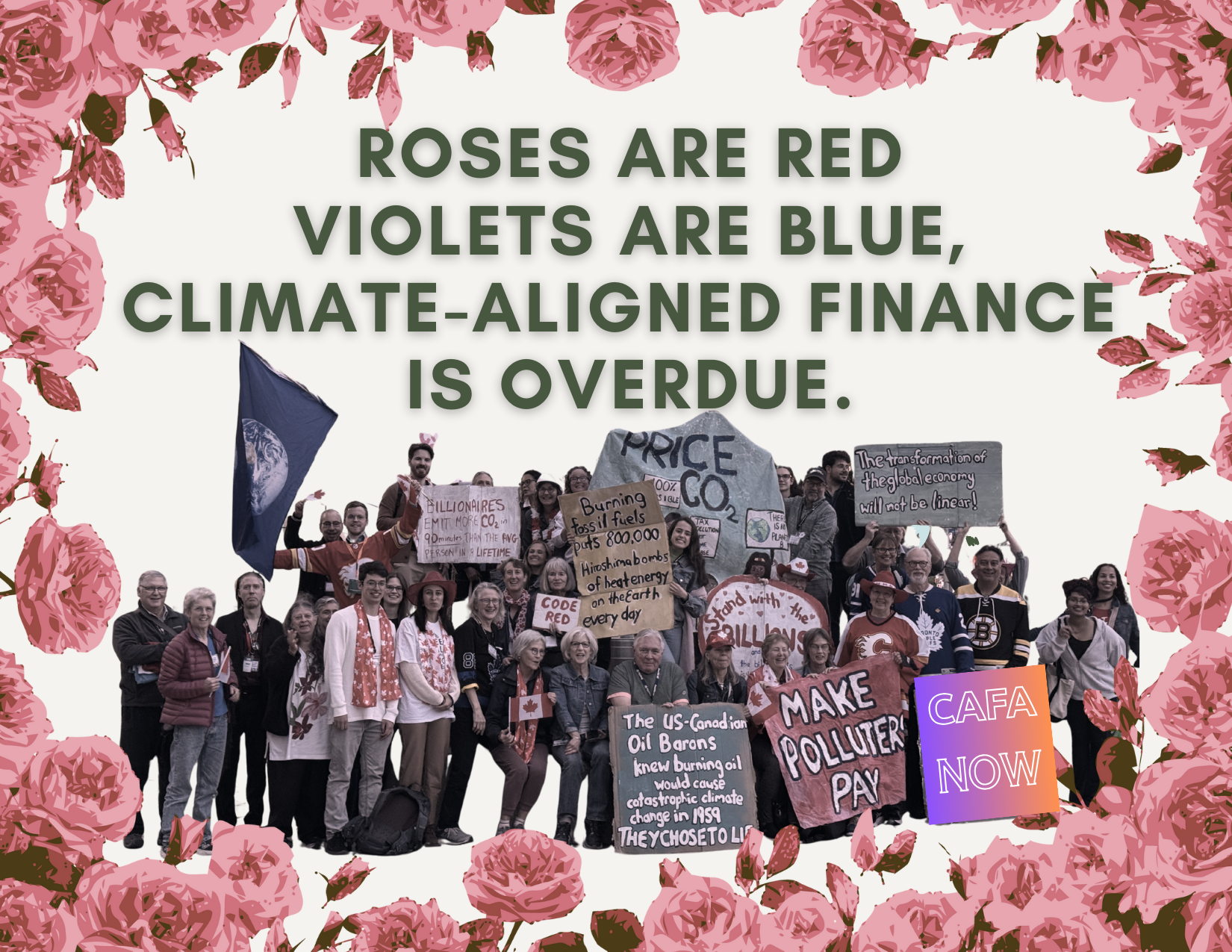
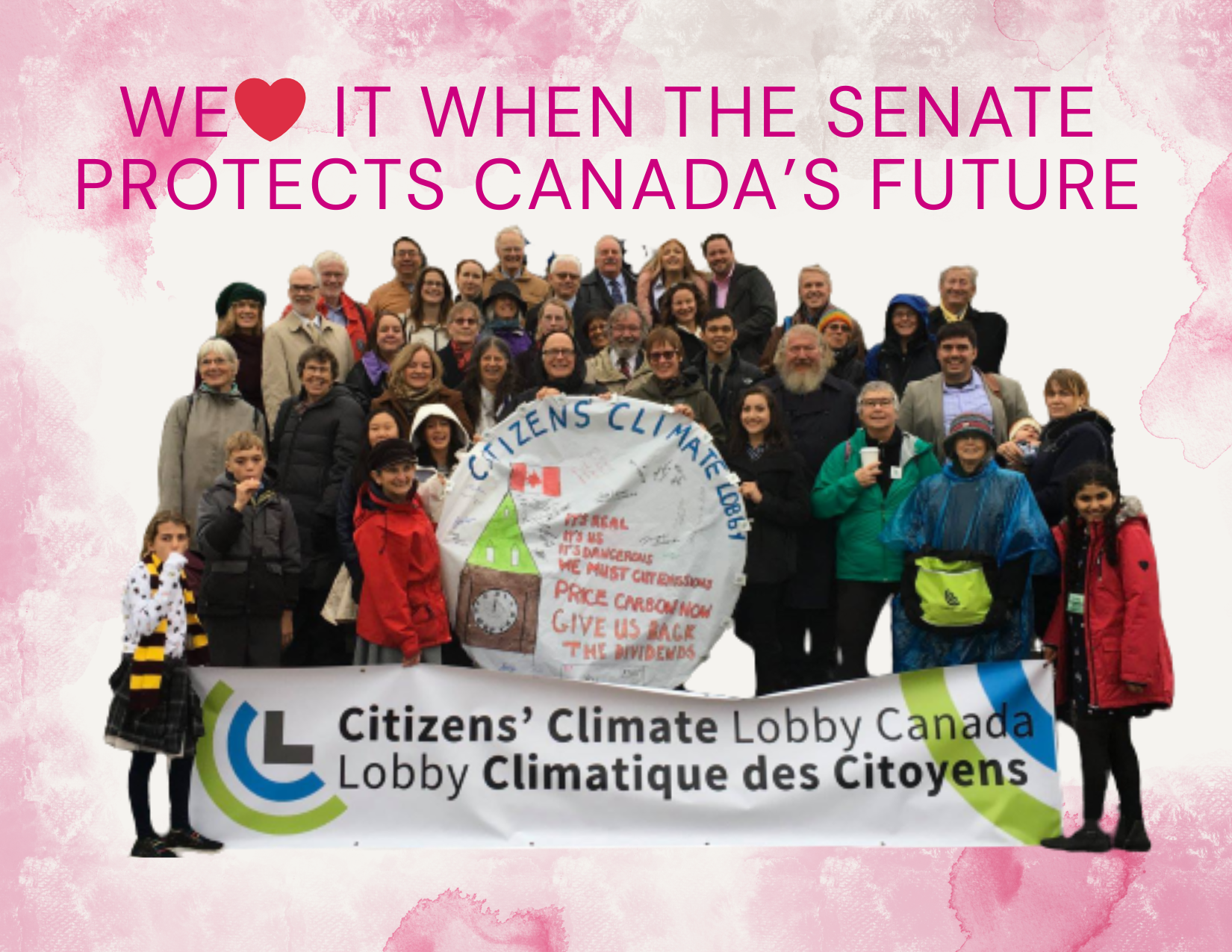
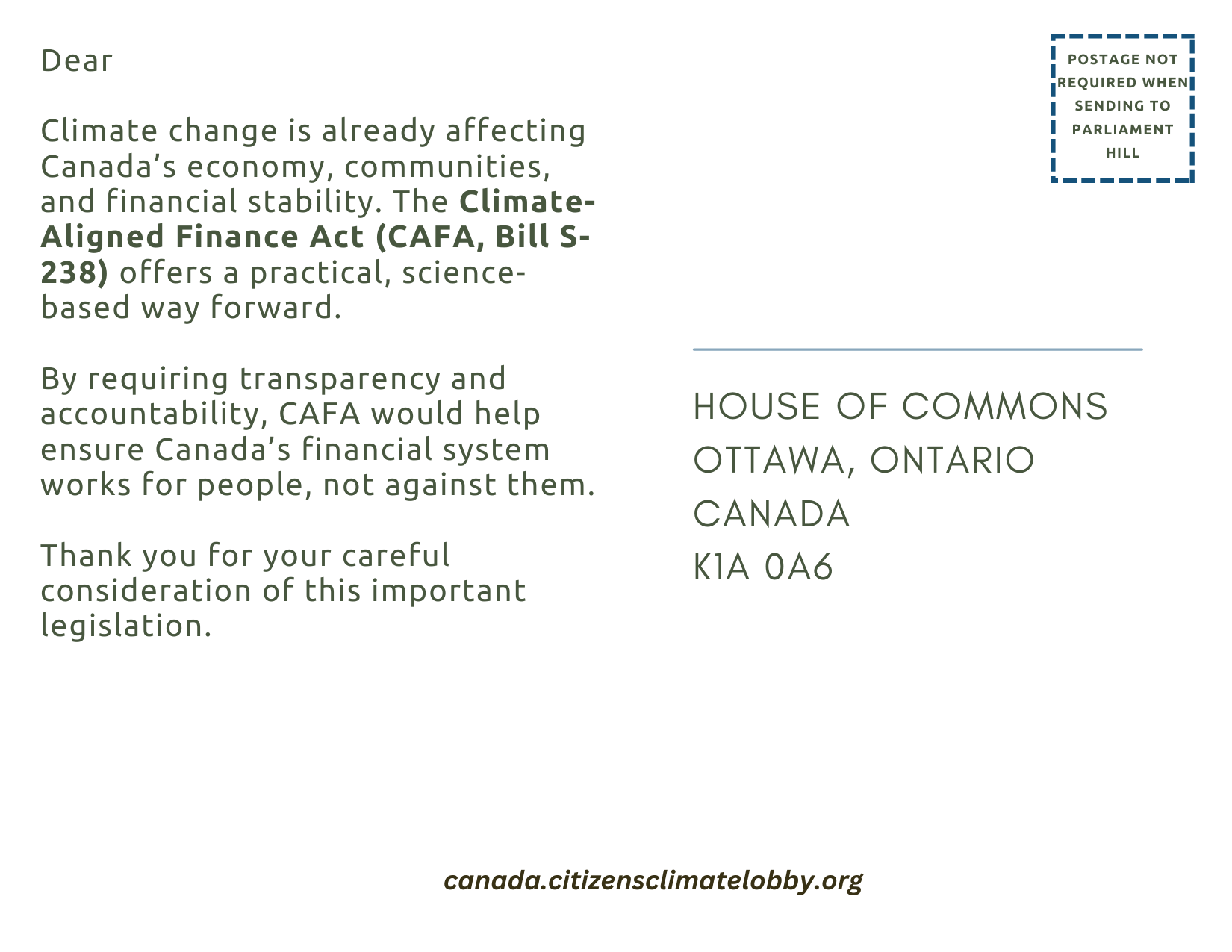
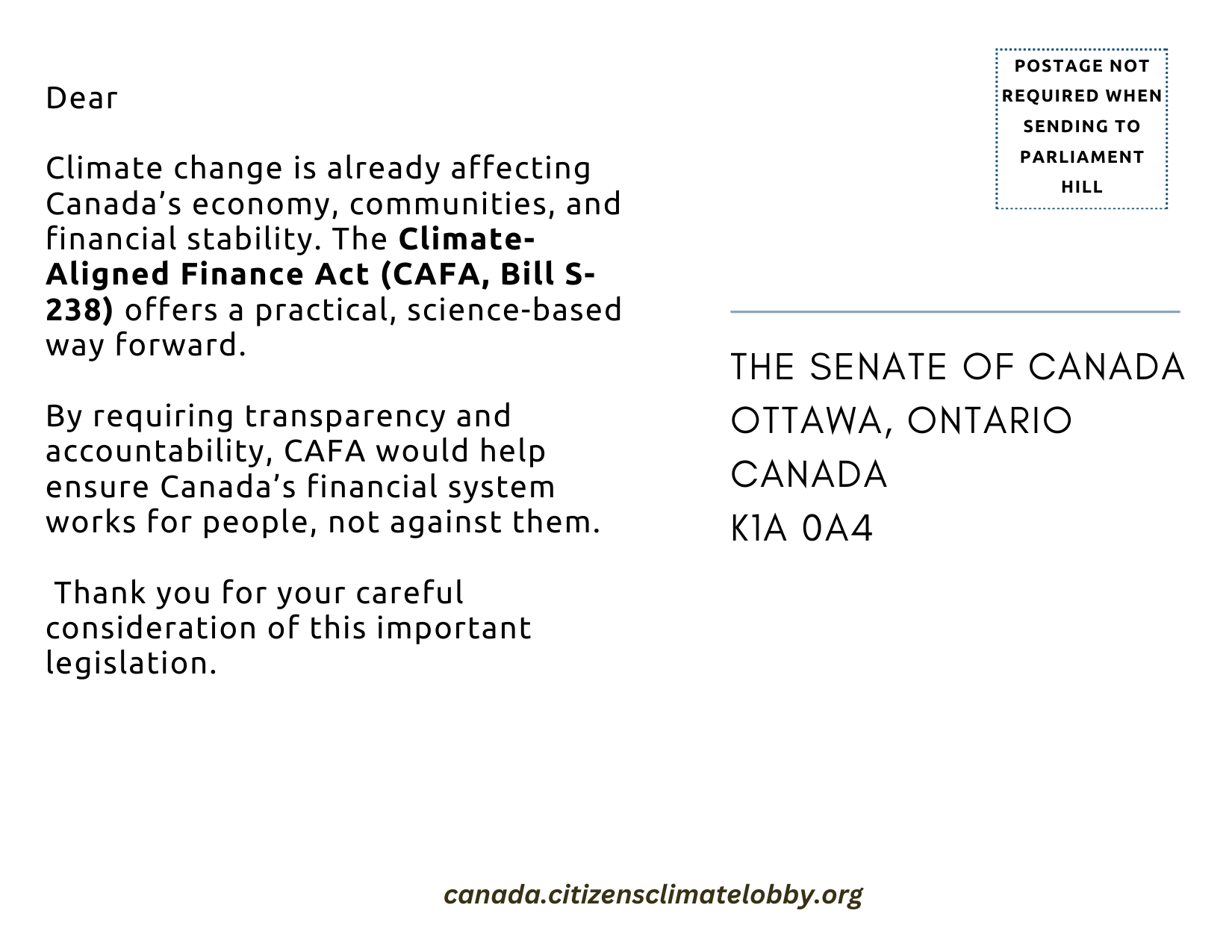
Or edit the images directly in Canva by making a copy in your own account.
– on card stock for postcards, or
– on regular paper if you’ll use envelopes.
Focus on Senators in your city, region, and province as well as:
Media Talking Points
Metrics
Why parliamentary paper petitions?
1. Parliamentary petitions educate MPs and build political will.
2. It gives MPs extra time to speak in the House of Commons (HoC) on top of their allotted time – which is important for re-election. They need to show leadership in the HoC.
3. They are a good litmus test for the acceptability of the language of the policy recommendation.
4. It publicly highlights climate champions interested in climate finance in the HoC and puts them on the record
5. They help MPs find like-minded MPs interested in climate finance.
6. These petitions are very low-hanging fruit. Only 25-30 signatures are needed. And you can keep submitting them.



![OPEN LETTER [closed]: Climate Aligned Finance Act II](https://canada.citizensclimatelobby.org/wp-content/uploads/2026/01/cafa-2026-featured-image-300x225.png)