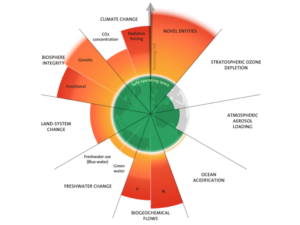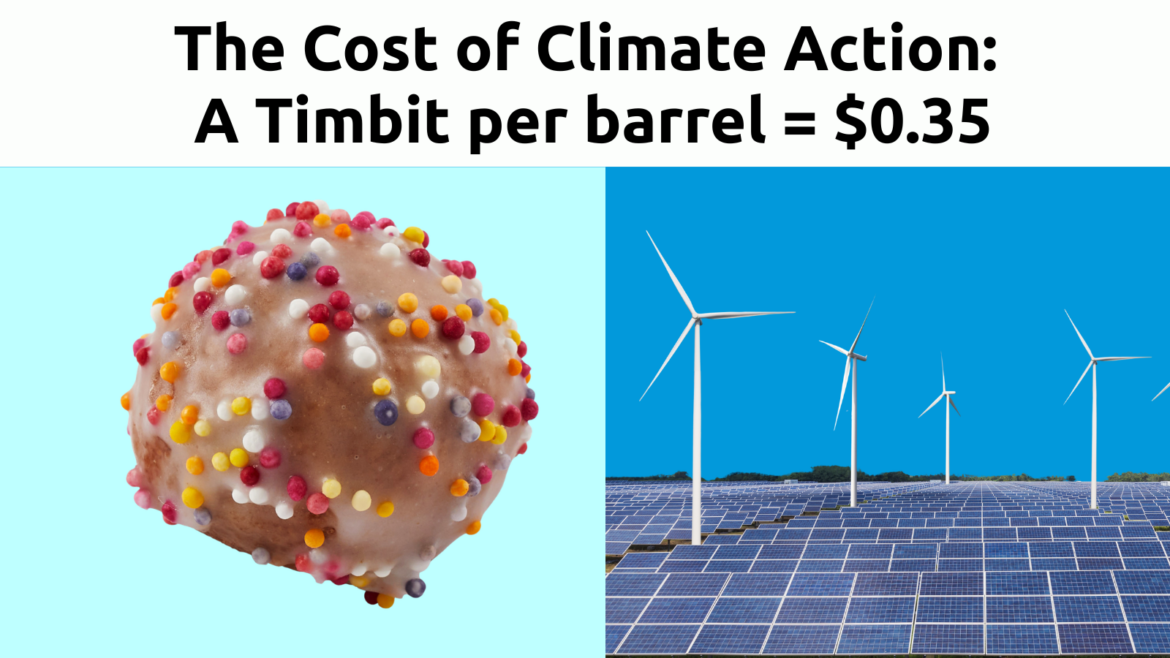
Sudbury ON in Robinson-Huron Treaty Territory– On April 15, the Government of Canada quietly released its National Greenhouse Gas Inventory Report, an annual submission required by the United Nations. Unlike previous years, this release lacked ministerial fanfare but its message is urgent, arriving just days before Earth Day. Canada’s emissions decreased by 0.3% in 2024 compared to 2023 bringing them down to 685 megatonnes of CO₂ equivalent. While this marks a 10.3% reduction from 2005 levels, progress remains slow. To meet Canada’s 2030 target, Canada must cut emissions by another 227 million tonnes in just six years. Meanwhile, the climate crisis intensifies. Emperor penguin chicks drown as Antarctic ice melts, and the Atlantic Meridional Overturning Circulation (AMOC) teeters on the brink of collapse. The Planetary Health Check 2025 confirms Earth’s resilience is fading but the window for action remains open, but we must act now. Last week, the Canadian government reconfirmed its commitment to reducing emissions by 40 to 45% below 2005 levels, but current modelling suggests the country is likely to miss these targets. At first glance, this might seem cause for pessimism. However, these models assume linear progress, a flawed assumption when it comes to economic and technological transformations. History shows that real change follows an S-curve: slow progress at first, then rapid acceleration as tipping points are reached. Canada’s opportunity lies in alignment, and cooperation. By synchronizing policies, finance, and innovation, the country can trigger exponential change. Most of the tools are in place, we just need to keep pushing because the transformation will not be linear as the models assume. Oil and gas production is responsible for 30% of Canada’s emissions, and burning fossil fuels generates 85% of global heating gases. The most effective climate solution, according to Navius Research, is industrial carbon pricing. This policy is remarkably affordable, costing the oilsands about the price of a Timbit per barrel of oil, just a fraction of recent price surges. For example, since the start of the Iran war on February 28, 2026, Brent crude prices have soared from about $70 to nearly $120 USD per barrel. With oil prices volatile and climate risks mounting, aligning Canada’s financial system with climate goals is more urgent than ever. A federal framework could help offset recent policy setbacks, such as the cancellation of the oil and gas emissions cap and consumer carbon pricing program. There’s more good news. History proves that when leaders act together, entire economic sectors accelerate onto the steep part of the S-curve. Others follow not out of altruism, but because the economics shift in favor of clean energy. From April 24-29, over 50 nations, including Canada, will attend a world-first conference on phasing out fossil fuels. In March, Citizens’ Climate Lobby Canada and Climate Reality Canada secured over 120 civil society sign-ons, urging Canada to engage meaningfully at this conference. “The transformation is already underway,” says Cathy Orlando, CCL Canada’s National Director. “For Canada, the path forward is clear: courage, cooperation, and a commitment to the S-curve’s promise, slow start, then unstoppable momentum.” Contact:From Timbits to Transformation: How to Accelerate Canada’s Climate Action
FOR IMMEDIATE RELEASE: Earth Day, April 22, 2026
Since 2010, Citizens’ Climate Lobby Canada (CCL) has worked tirelessly to build political will for a liveable world. This past year brought unprecedented setbacks, including the cancellation of the oil and gas emissions cap and the consumer carbon price and rebate program. Yet, as we mark Earth Day 2026, CCL remains optimistic and for good reason.
Canada cannot afford to be left behind as the world accelerates its shift to clean energy. The International Energy Agency reports that global clean energy investments now outpace fossil fuel spending, with major economies setting ambitious phase-out timelines for coal, oil, and gas. For a petrostate like Canada, this transition presents both a challenge and an opportunity.
Cathy Orlando, National DirectorCitizens’ Climate Lobby Canada
cathy@citizensclimate.org | 705-929-4043