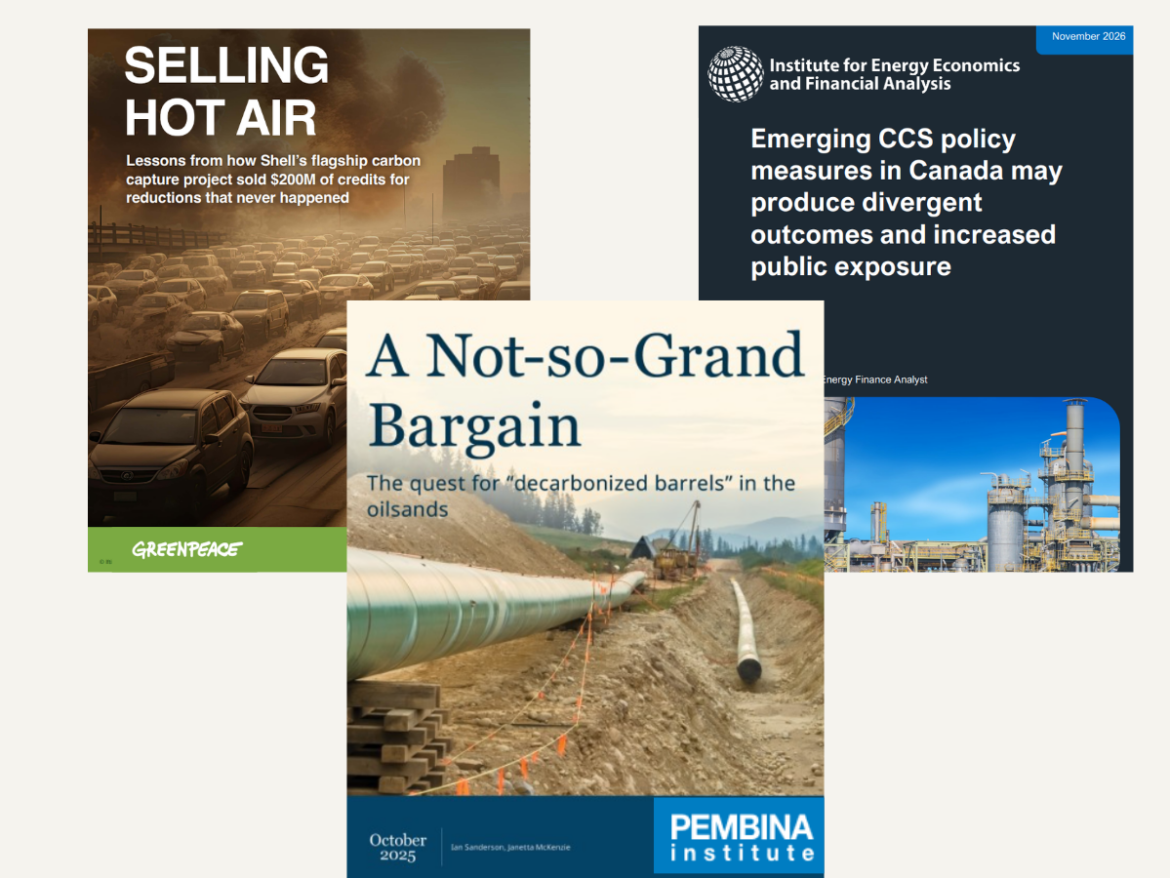
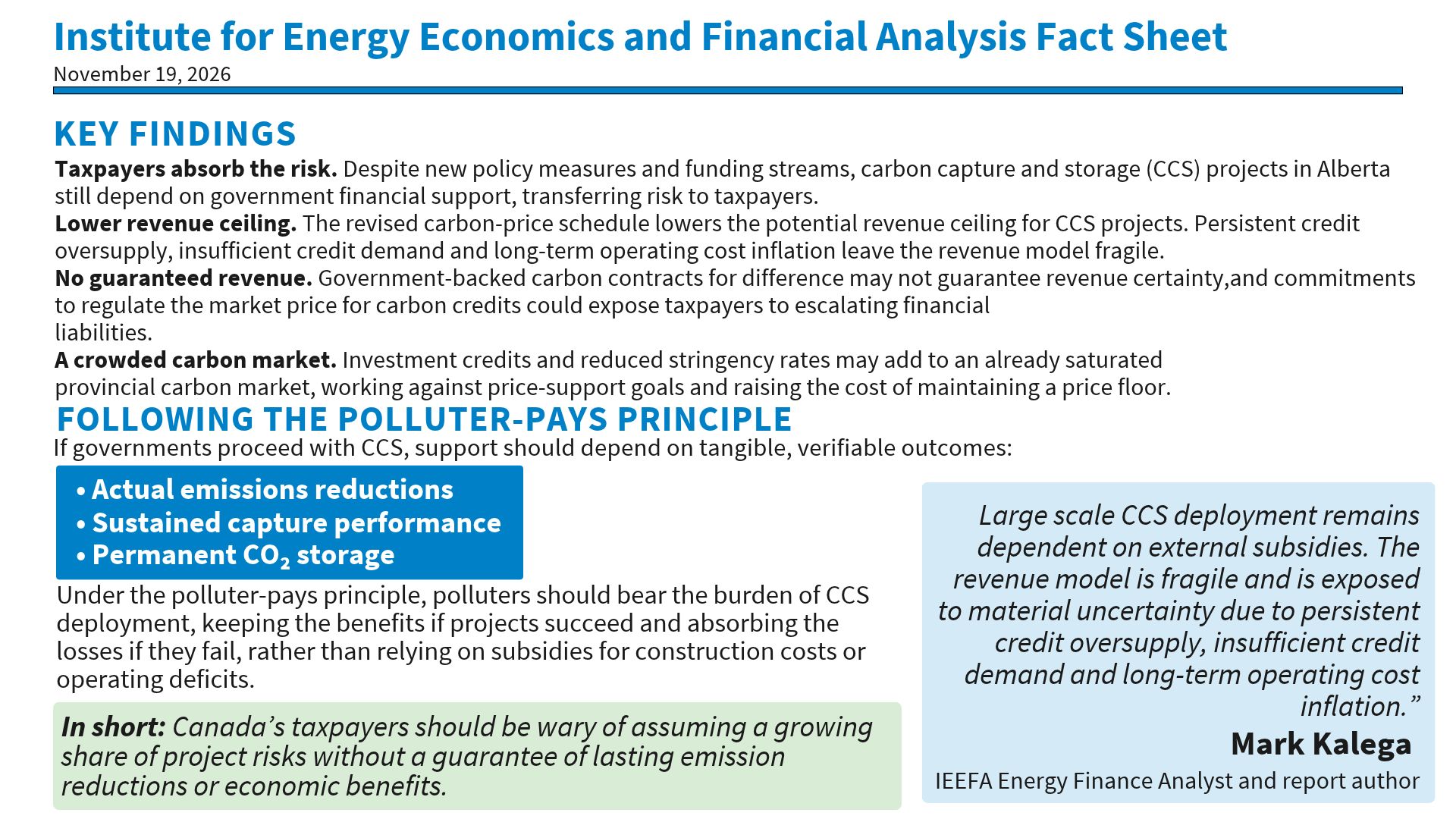
A 2025 study found that transitioning all 149 countries’ energy systems to 100% wind, water, and solar (WWS) would eliminate energy-related air pollution deaths and CO2-equivalent emissions while cutting end-use energy needs by roughly 54% and annual energy costs by roughly 60%, with a full social cost payback of under one year. Conversely, policies promoting carbon capture (CC) or synthetic direct air capture (SDACC) would impose social costs of $60 to 80 trillion per year across the 149 countries, or 9.1 to 12.1 times the WWS social cost, and would still increase air pollution, CO2-equivalent emissions, energy needs, and equipment costs relative to WWS. The authors conclude that even partial deployment of CC/SDACC substantially raises social costs and emissions, and recommend that policies promoting carbon capture and synthetic direct air capture be abandoned in favour of 100% WWS pathways. Reference: At the rate of capture (0.59 MTCO2/y) from new Carbon Capture and Direct Air Capture (CC/DAC) installations operational in 2026 where the CO2 is not used for enhanced oil recovery, it will take 81,000 years to build enough CC/DAC to capture the current emissions of CO2 from fossils and land-use change (47,200 MTCO2/y). All CC/DAC ever built for non-EOR purposes captures only 0.04% of today’s CO2 emissions. None of this accounts for all the direct and opportunity-cost CO2 and air pollution released back to the air from the energy used to run the CC/DAC equipment, which negates any benefit. Conclusion: Carbon Capture (CC) and Direct Air Capture (DAC) are questionable opportunities. https://www.globalccsinstitute.com/global-status-of-ccs/ https://www.globalccsinstitute.com/wp-content/uploads/2026/10/Global-CCS-2026-Executive-Summary.pdf On November 19, 2026 the Institute for Energy Economics and Financial Analysis (IEEFA )released their latest report on carbon capture and storage (CCS). Here are the key findings: Since the 2025 report, the May 2026 Canada-Alberta implementation agreement and a subsequent Trilateral Memorandum of Understanding (MOU) among the federal government, the province of Alberta and the Oil Sands Alliance have been signed. Both agreements include key fiscal and regulatory adjustments, subject to the conclusion of a definitive agreement expected to be announced shortly. Canada’s taxpayers should be wary of being made to assume a growing share of project risks without a corresponding guarantee of lasting emission reductions or economic benefits. Full report: https://ieefa.org/sites/default/files/2026-11/Emerging%20CCS%20policy%20measures%20Canada_November%202026.pdf Fact sheet: https://ieefa.org/sites/default/files/2026-11/IEEFA_Canada_CCS_Fact_Sheet%20%281%29.pdf Takeaway: Building new fossil fuel infrastructure on the premise that Carbon Capture and Sequestration (CCS) will be able to sink emissions is a dangerous fairy tale. CCS is a general term for a range of different industrial processes that can separate carbon dioxide (CO2) emissions from smokestacks and store it underground indefinitely as toxic waste. Citizens’ Climate Lobby does not oppose or support any specific technologies. Studies have found that without adequate carbon pricing, CCS deployed at the scale required to meet climate targets is unlikely. https://www.nature.com/articles/nenergy2017141 (2017) One of the key conclusions of the final IPCC AR6 synthesis report in March 2023 was clear: existing and currently planned fossil fuel projects are already more than the climate can handle. An April 4, 2023 analysis in Nature concluded: A September2023 report from the International Institute for Sustainable Development (IISD) found CCS for oil and gas is too costly and unlikely to get much cheaper because the technology is complex, needs custom design for each project, and cannot benefit from mass production like solar panels. In December 2023 Influence Map reported that most corporate advocacy promoting CCS for addressing climate change is not aligned with pathways recommended by the IPCC for limiting global temperature rise to 1.5°C or well-below 2°C. https://influencemap.org/report/CCS-and-Corporate-Policy-Engagement-24754 In May 2024, Greenpeace Canada reported that Shell’s flagship CCS project generated over $200 million (CAD) by selling credits for emissions cuts that never occurred. The findings, published in the investigative report Selling Hot Air.. On July 3, 2024, Desmog reported that Canadian oil companies removed CCS claims from their websites before new rules in Bill C-59, came into effect. Bill C-59 introduced significant amendments to Canada’s Competition Act, specifically targeting misleading environmental claims, commonly referred to as “greenwashing.” An April 2025 analysis of the impact of CCS on water resources in Alberta warns that future water supply has the potential to constrain CCS development. In the spring of 2025 at a Fraser Institute meeting, Bjorn Lomborg, a well known fossil fuel proponent and “friend” of the Trump administration’s energy secretary, upon reflecting on the fact that current costs for CCS in Canada could be as high as $150 per tonne of CO2 said, “It’s not going to happen.” Finally, a September 2025 study in Nature challenged the idea that CCS can store massive amounts of CO2. While earlier estimates suggested 10,000 to 40,000 billion tonnes, the study finds only a small fraction is viable, with a safer global limit of about 1,460 billion tonnes. https://www.nature.com/articles/s41586-025-09423-y Addendum: This September 20, 2025 article by Anushka Yadav is deep and scathing. https://thepointer.com/article/2025-09-20/carney-backs-reckless-lng-project-unproven-carbon-capture-being-spun-as-clean-oil ———– This is a text block. Click the edit button to change this text.Clean Energy versus Capturing Carbon
Jacobson, M. Z., Fu, D., Sambor, D. J., & Mühlbauer, A. (2025). Energy, Health, and Climate Costs of Carbon-Capture and Direct-Air Capture versus 100% Wind-Water-Solar Climate Policies in 149 Countries. Environmental Science & Technology, 59, 3034–3045. https://web.stanford.edu/group/efmh/jacobson/Articles/I/149Country/149-Countries.pdf
Carbon Capture and Direct Air Capture are Questionable Opportunities
– 74.3% of all CO2 captured today from all installations built in any year is used for EOR (which releases 50-120% of the CO2 back to the air).
– 68.1% of all CO2 captured from 2026 installations is used for Enhanced Oil Recovery Recovery.
https://web.stanford.edu/group/efmh/jacobson/Articles/I/149Country/149-Countries.pdf
Carbon capture and storage projects in Canada still face weak economics
CCS: A Not So Grand Bargain
https://www.pembina.org/pub/not-so-grand-bargain (October 2025)
https://canada.citizensclimatelobby.org/ipcc-synthesis-report-how-to-diffuse-a-climate-time-bomb-hint-follow-the-money/
Humanity has never removed an atmospheric pollutant at a global, continental or, even, regional scale — we have only ever shut down the source and let nature do the clearing up. This is the case for chlorofluorocarbons and stratospheric ozone destruction, for sulfur dioxide and acid rain, and for sulfur and nitrogen oxides and photochemical smog. We must be prepared for CCS to be a failure, leaving us to rely on the environment to stabilize atmospheric CO2 over thousands of years. This is another argument for rapid decarbonization.
https://www.nature.com/articles/d41586-023-00953-x
https://www.iisd.org/system/files/2023-09/bottom-line-why-carbon-capture-storage-cost-remains-high.pdf
https://www.greenpeace.org/static/planet4-canada-stateless/2024/02/4b010c8b-en-selling-hot-air-report.pdf
https://www.desmog.com/2024/07/03/canada-competition-act-oil-companies-delete-carbon-capture-websites-new-regulations-pathways-alliance/
https://www.eralberta.ca/wp-content/uploads/2025/05/WaterSMART_CCUS-Study_Report_2025.04.08.pdf
https://www.desmog.com/2025/06/05/carbon-capture-not-going-to-happen-top-fossil-fuel-advocate-predicts/
Related Articles
-

Our Feedback on Strengthening Industrial Carbon Pricing and Securing Major Clean Energy Investments
-
Budget 2025: Meeting the Moment? Not on Climate
-
Media Release: Constituents to Converge in Ottawa to Ask MPs to “Meet the Moment”
-
520 Signed onto our Open Letter Nation‑Building in a Climate Emergency